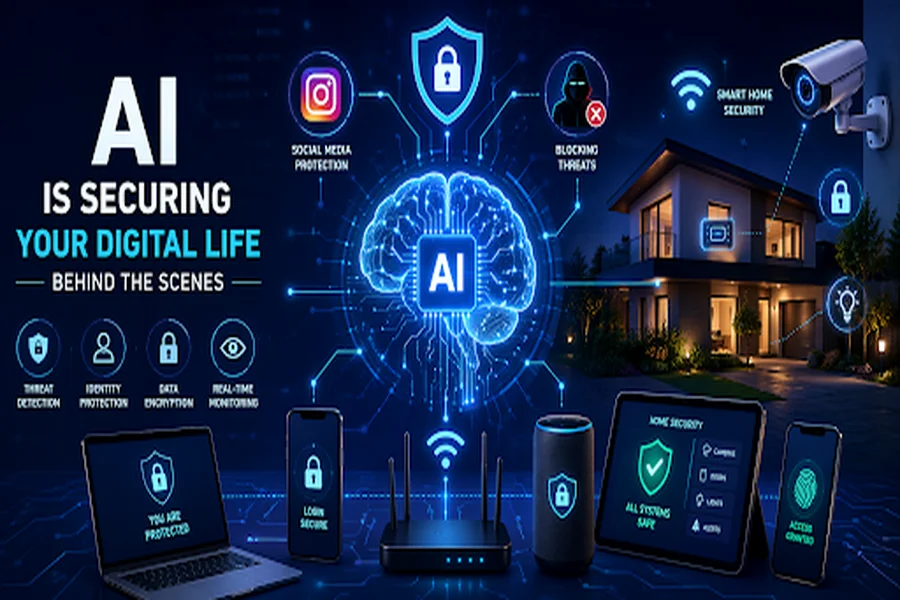
In today’s connected world, your digital life stretches far beyond a single device. From smartphones and laptops to smart home gadgets and social media accounts, everything is linked—and everything needs protection. While most users rely on passwords or basic security tools, there’s a powerful force working quietly in the background: artificial intelligence. The rise of AI in cybersecurity is transforming how we stay safe online, often without us even realizing it.
The Invisible Shield of AI
Unlike traditional security systems that rely on fixed rules, AI works dynamically. It learns patterns, identifies unusual behavior, and reacts instantly. This makes it far more effective at detecting threats before they cause harm. Whether it’s recognizing suspicious login attempts or blocking malware, AI acts like an invisible shield around your digital presence.
For example, if someone tries to access your account from a new location or device, AI systems can instantly flag the activity. Instead of waiting for a manual response, these systems can lock the account or request additional verification within seconds. This proactive approach is what sets AI apart from older methods.
Smarter Password and Account Protection
Passwords remain one of the weakest points in digital security. Many users still rely on simple or repeated passwords, making them easy targets for hackers. AI improves this by analyzing login behavior rather than just credentials.
Modern platforms use AI to detect patterns such as typing speed, device usage, and login timing. If something seems off, access is restricted—even if the correct password is entered. This means your accounts are protected not just by what you know, but by how you behave.
AI is also powering advanced password managers that generate strong, unique passwords and store them securely. These tools can even alert you if your credentials have been exposed in a data breach, helping you take action before it’s too late.
AI Home Security: Beyond Traditional Systems
The concept of AI home security has expanded far beyond alarms and cameras. Today’s smart homes are equipped with intelligent systems that can monitor activity, recognize faces, and detect unusual movements.
For instance, smart cameras powered by AI can differentiate between a family member, a delivery person, and a stranger. Instead of sending constant alerts, they only notify you when something truly suspicious happens. This reduces false alarms and ensures you stay focused on real threats.
Additionally, AI can secure your home network by monitoring connected devices. With so many gadgets—from smart TVs to voice assistants—your home network can become a target. AI helps by identifying vulnerabilities and blocking unauthorized access automatically.
Social Media Protection in the AI Era
Social media platforms are a major part of our daily lives, but they also come with significant risks. From account hacking to privacy breaches, users face constant threats. AI plays a crucial role in keeping these platforms secure.
Many platforms use AI to detect fake accounts, harmful content, and suspicious interactions. It can also identify unusual activity on your profile, such as sudden changes in behavior or unauthorized logins.
There’s also growing interest in tools like private Instagram viewer AI, which claim to offer access to restricted content. However, users should approach such tools with caution. While AI can enhance user experience, not all applications are ethical or secure. Relying on trusted platforms and official features is always the safer choice.
Real-Time Threat Detection
One of the biggest advantages of AI is its ability to respond in real time. Traditional security systems often react after a threat has already occurred. AI, on the other hand, predicts and prevents attacks before they happen.
By analyzing massive amounts of data, AI can identify patterns linked to cyber threats. This includes phishing attempts, ransomware attacks, and suspicious downloads. Once detected, the system can block the threat immediately, protecting your data and devices.
This real-time protection is especially important for businesses, but it’s equally valuable for everyday users. Whether you’re browsing the web or checking emails, AI is constantly working to keep you safe.
Smart Home Security Integration
The integration of smart home security systems with AI creates a seamless and intelligent protection system. Instead of managing multiple devices separately, AI connects everything into a unified network.
For example:
- Your smart lock can communicate with your security camera
- Your home assistant can alert you about unusual activity
- Your WiFi system can block unknown devices
This interconnected system ensures that every part of your digital and physical space is protected. It also makes security more convenient, allowing you to monitor and control everything from a single app.
The Future of AI in Cybersecurity
As technology continues to evolve, the role of AI in cybersecurity will only grow stronger. Future systems will become even more predictive, identifying risks before they fully develop. We may also see AI replacing traditional passwords altogether, using biometrics and behavioral analysis instead.
However, with these advancements come new challenges. Cybercriminals are also using AI to develop more sophisticated attacks. This creates a constant battle between security systems and threats. The key advantage lies in staying ahead—and AI is currently leading that race.
Final Thoughts
Your digital life is more complex than ever, but it’s also more secure—thanks to artificial intelligence. From protecting your accounts to enhancing AI home security and strengthening smart home security, AI is working behind the scenes to keep you safe.
While users may not always notice its presence, its impact is undeniable. By understanding how AI operates and using trusted tools, you can take full advantage of this technology and ensure your digital world remains protected.
In a time where online threats are constantly evolving, having AI on your side isn’t just helpful—it’s essential.